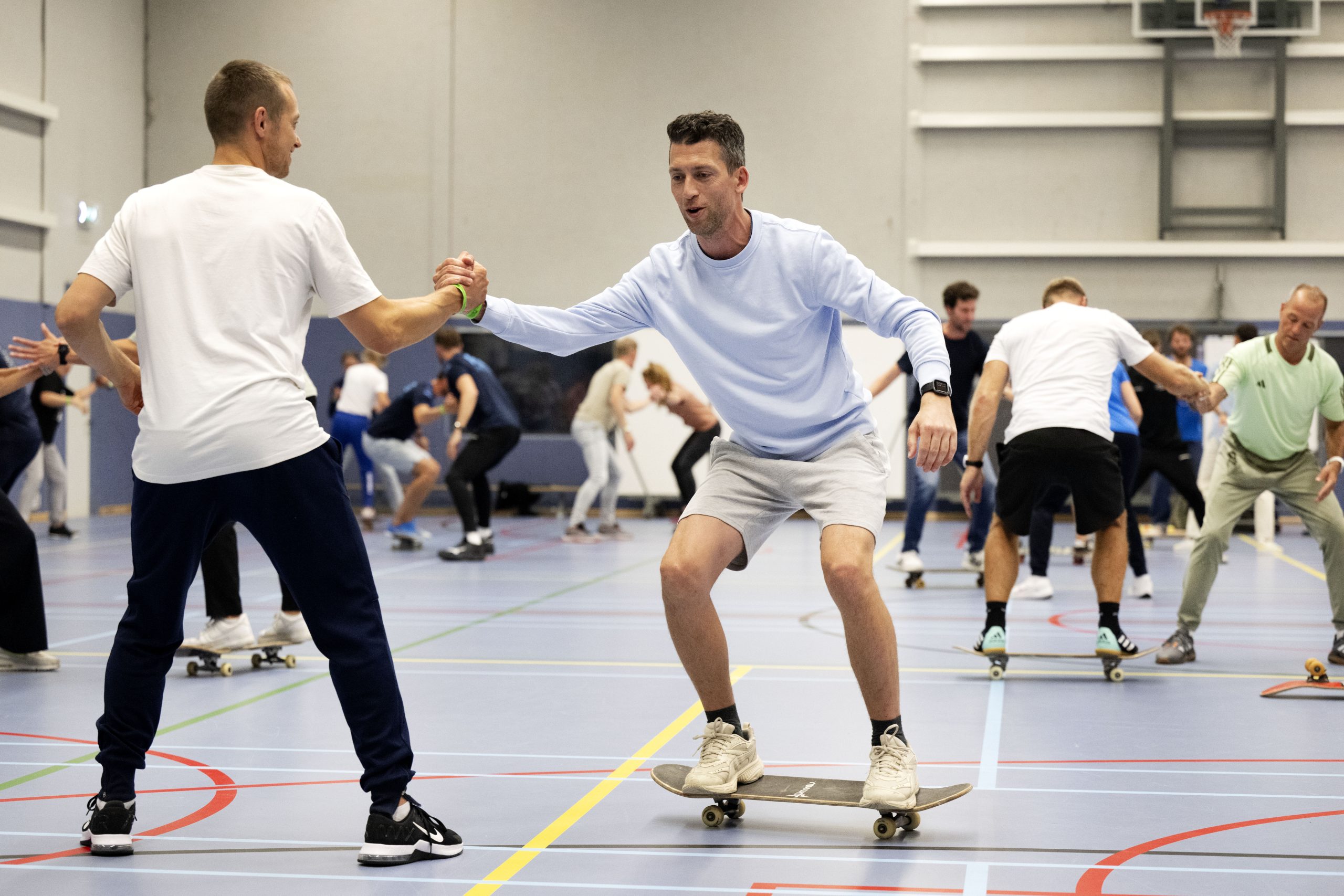
UK Coaching: Developing Versatile Participants in a Nonlinear Way with the Athletic Skills Model (ASM)
The Athletic Skills Model (ASM) is a practical and scientifically grounded framework that offers coaches a structured approach to designing and implementing a movement programme that develops adaptable and versatile movers.
By Dr Martina Navarro1,2 & Alex Beckey1,3
1 The Athletic Skills Model UK
2 University of Portsmouth
3 St Mary’s University
1.Exploiting transfer – Transfer of learning.
2.The concentric approach – ASM Building Blocks.
3.Creating challenging environments.
ASM Development Framework
1.
2.
3.
A versatile mover can (more likely) become an athlete (from recreational to elite) *
4.
5.
* Note: In the ASM an athlete means anyone who develops into an all-around versatile mover from those who participate in physical activity for personal health and well-being to professional athletes. The differences across levels are on the quality and capacity that movements are performed.
In summary, first participate in several different physical activities or sport, then specialise. However, it’s important to note that the participation in different activities or sport, should be carefully chosen depending on the individual, goals and aspirations, the target sport, time and season and resources available. ASM provides guidance to practitioners on planning a well thought development programme.
1. Exploiting Transfer – Transfer of learning
For ASM, physical activity and sports have more in common than they differ. ASM goes beyond randomly participating and training in different activities or sports. The model offers any coach, of any physical activity or sport and skill level, the tools to develop a versatile and varied programme in a structured way that can be implemented within any environment.
According to the ASM and related theories, a versatile yet structured programme will result in transfer of learning – that is the application of skills and abilities developed in one context into another context.
For example, the professional football player and also black belt in Taekwondo Zlatam Ibrahimovic adopts kicking techniques developed in martial arts when striking a football. This is one example of transfer of learning in the movement domain between two different sporting contexts.
Transfer of learning can occur in different domains:
Transfer of Movement
Transfer of Physical Conditioning
Transfer of Concept
Transfer of Perception
Transfer of Competence
2. A concentric approach – ASM Building Blocks
ASM adopts the concentric approach to exploit transfer of learning in a structured way. The concentric approach proposes that a basic movement skill such as kicking a ball in football can be optimally developed by practising all types of kicking in other activities and sports (think about our previous example of Zlatan Ibrahimovic). For example, a versatile concentric approach to kicking in football would include: kicking in martial arts, performing a drop-kick in rugby, performing a smash kick in footvolley or teqball. To support coaches in adopting the concentric approach, the model consist of three building blocks:
Basic Movement SkillsTen fundamental skills for the development of versatile movers: 1. Balancing & falling – 2. Romping & fighting – 3. Moving & locomotion – 4. Jumping & landing – 5. Rolling, tumbling & turning – 6. Throwing, catching, hitting & aiming – 7. Kicking, shooting & aiming – 8. Climbing & scrambling – 9. Swinging – 10. Music in motionCoordinative AbilitiesSeven coordinative abilities that enhance the quality of movement: 1. Adaptability – 2. Coupling ability 3. Rhythmic ability – 4. Kinetic differentiating ability – 5. Spatial orientation ability – 6. Balance ability – 7. Ability to reactConditions of MovementFive condition of movement to increase fitness levels: 1. Agility – 2. Flexibility – 3. Power – 4. Endurance – 5. Stability
The concentric approach is applicable to all Basic Movement Skills that can be implemented and integrated in a broad range of complex skills considering the coordinative abilities and conditions of movement.
3. Creating challenging environments
When adopting the ASM building blocks to structure a programme, coaches are encouraged to create challenging environments according to movers skills. To create challenging environments, the ASM is informed by the constraints-led approach (Newell, 1986). According to this approach, movement patterns are the result of the interaction between task, environment and the performer (including their skill, coordinative and fitness levels). Coaches can encourage certain movements by manipulating any of these constraints. Hence, considering the ASM building blocks, coaches can foster a broader and versatile movement repertoire without necessarily relying on verbal instructions.
Skills Garden®#DesignedbyASM #PoweredbyCREATIVITY.PLAYCE®#DesignedbyASM #PoweredbyCREATIVITY.PLAYCE®#DesignedbyASM #PoweredbyCREATIVITY.Skills Garden®#DesignedbyASM #PoweredbyCREATIVITY.Skills Garden®#DesignedbyASM #PoweredbyCREATIVITY.PLAYCE®#DesignedbyASM #PoweredbyCREATIVITY.PLAYCE®#DesignedbyASM #PoweredbyCREATIVITY.
ASM Benefits
The transfer of learning and the benefits associated with can be achieved by planning, designing and implementing structured programmes that focus on developing versatile movers in a non-linear concentric approach. The scientific evidence underpinning ASM highlights how optimal performance, development and improved health and well-being can be achieved via a holistic approach resulting in: